
Why Does My European Cat Have a Recurrent Scab on Her Ear? (Vet Answered)

This question has been answered by a vet

Small Animal Veterinarian
Dr. Karyn is a small animal veterinarian originally from Australia, now based in the UK. She holds degrees in Veterinary Science (2010) and Zoology. When not helping pets, she tends to her 5 cats and garden!
The Question
Hello, I would really appreciate a veterinary opinion about a lesion on my cat’s ear. There is a small raised/thickened area along the edge/base of the ear. I can see this raised area in photos dating back to December, so it has been present for at least several months. Its appearance seems to fluctuate: sometimes the area looks relatively calm, while at other times it becomes red/irritated and develops dark brown/black crusting. Recently, a dark/black crust appeared again over the area. It seemed to develop very quickly (within approximately a day after the previous crust/lesion was disturbed), which made me wonder whether this could simply be dried blood/exudate from an irritated wound rather than a new growth. The cat also has darker/black material or spots on parts of the ears more generally. I have wondered whether this could be related to a dermatological problem such as Malassezia, although this has not been confirmed. A veterinarian examined her ears a few months ago and did not seem concerned about anything serious at that time. However, because I can see this particular raised area repeatedly in older photographs and it continues to become irritated/crusted, I am now extremely worried about the possibility of a skin tumour. What should I do? Thank you very, very much.
Quick Info about Pisica Mica
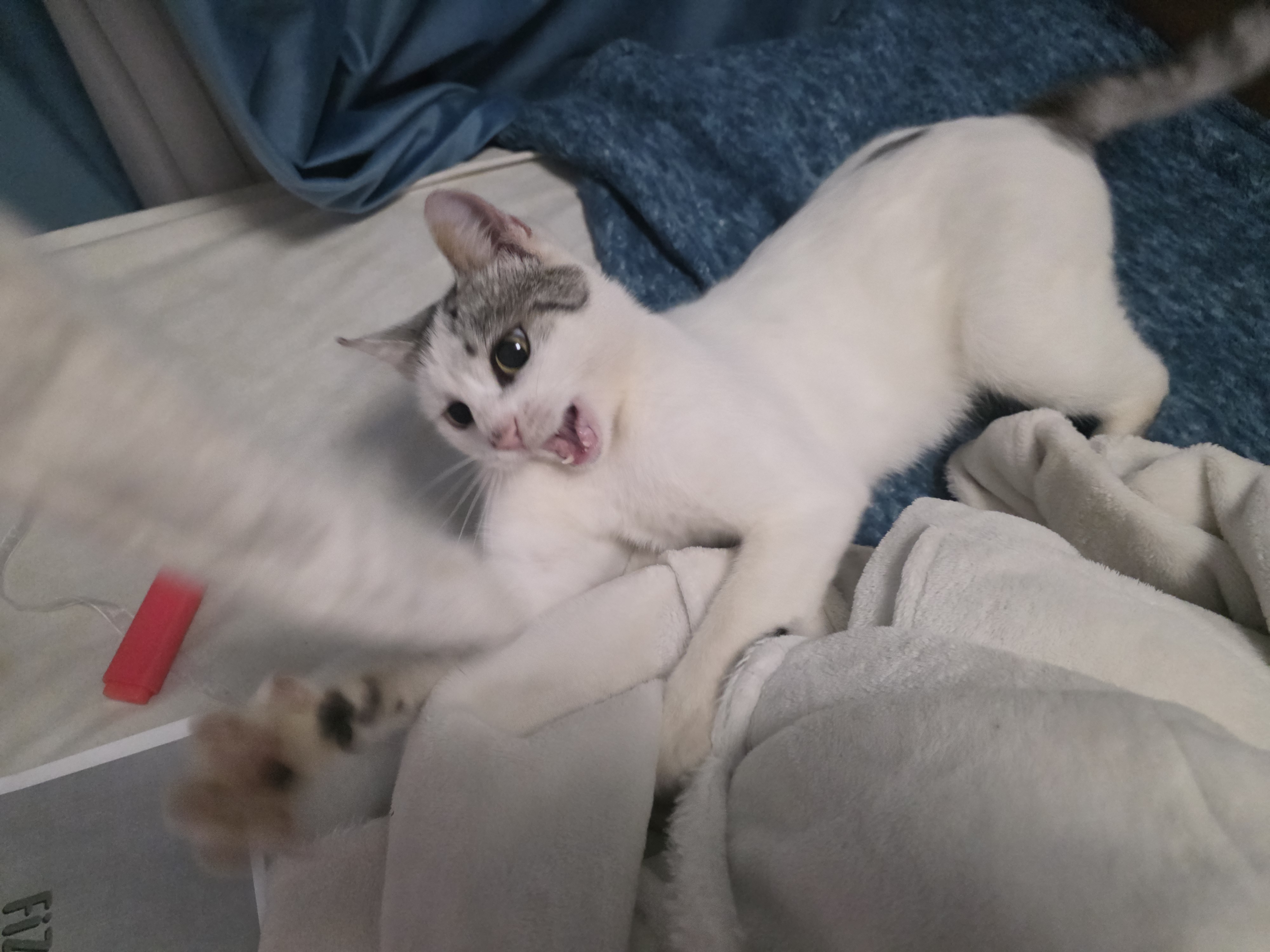
 Pisica Mica's profile picture
Hi Adina,
Thanks so much for writing in. I love the action shot of Pisica Mina - what a cutie!
The trouble with any wounds or growths on a cat's ears is that they can often delay or prevent healing because of their own cleaning habits. Rubbing or scratching at the ears will dislodge any scabs forming, and shaking the head can increase blood flow to the outer edges of the ears too, so it may simply be that she has some small wounds that just aren't healing.
It would be a good idea to have your vet do a thorough otoscopic examination to rule out any infection or growths in the ear canals that could be causing irritation.
Because Pisisca Mina's ears are partially white, there is a bit of concern about squamous cell carcinoma, the most common type of skin cancer in cats, with ears and noses being the most common locations. I would recommend having a small biopsy of the affected areas sent for laboratory analysis to determine if this is the issue. The good news is that most SCCs are fairly slow-growing, and surgery on the ears to remove the affected tissue is often quite successful, though it does alter the appearance of the cat.
Cats can also suffer from a form of peripheral vasculitis, causing inflammation and clotting issues in the blood vessels supplying the ear tips. This condition is often immune-mediated, but can also be triggered by certain infections, medications, or recent vaccination, and is also diagnosed with a biopsy.
I would also recommend picking up an Elizabethan collar (or e-collar) for 2 reasons:
To stop her from being able to scratch or rub the ears, giving any chronic wounds a chance to heal
She will need one of these if she has a biopsy, and particularly if she needs surgery.
(I used this one for my cat recently and he coped with it pretty well!)
Hopefully it's nothing too worrying, and using a collar to prevent her from rubbing at the ears will be all that is needed, but it's always best to be safe than sorry.
Good luck!
Dr Karyn