
Why Does My Cat Still Snore After Finishing Respiratory Treatment? (Vet Answered)

This question has been answered by a vet

Small Animal Veterinarian
Dr. Karyn is a small animal veterinarian originally from Australia, now based in the UK. She holds degrees in Veterinary Science (2010) and Zoology. When not helping pets, she tends to her 5 cats and garden!
The Question
Hi, my kitten has been suffering from a respiratory infection for about a month, until about a month ago when we took him to the vet to get the proper treatment. He was sneezing, snoring when he breathed, etc. But he continued to eat, sniff, and play normally. The vet told us he would receive a course of three injections over three consecutive days, but we were only able to take him in for two due to personal reasons. My cat improved considerably thanks to those two injections, but he still snores—though noticeably more softly than before—and sometimes exhales sharply after playing, like a “snff.” He continues to eat, play, and sleep as usual. He never stopped eating or playing; he’s always been active before, during, and after his treatment. He’s 3 years old, and it’s been a month since we started the treatment. I’m a little concerned about his slow recovery because, as I mentioned, he still snores sometimes (though noticeably less than before). How long will it take for him to fully recover, and what could I give my kitten to help him recover as quickly as possible? The vet didn’t give us a prescription, but told us it was a mild, common respiratory infection (and that it was probably caused by the change in weather), since he’s always been active. The vet also told us that he gave my cat an injection for respiratory illnesses. Sometimes he gets tiny eye discharge, much smaller than what he used to have. He hardly ever gets any now. He keeps coming to me to play, keeps asking for food, and so on. In fact, people have told me he’s gotten a little chubbier. They didn’t give us the prescription. They just told us they gave him shots for respiratory illnesses. This is the first time something like this has happened to him; it had never happened before—only this year. I used to keep the window open all the time, but I started closing it when I realized what was happening to my kitten. Now there aren’t as many drafts, and everything’s calm. It’s just that sometimes he goes into dusty places and sneezes. When he lies down to sleep, that’s when he snores with a runny nose the most. He makes that “snff” sound randomly, and sometimes he does it after playing. As I said, I was only able to give him 2 out of 3 doses for personal reasons, and it’s been a month and a little more since his doses. Apparently, the cause was the change in weather and drafts, but I really don’t know. I'd love to know if he's just having a very slow healing process or if I need to go to the vet again.
Quick Info about Bodoque
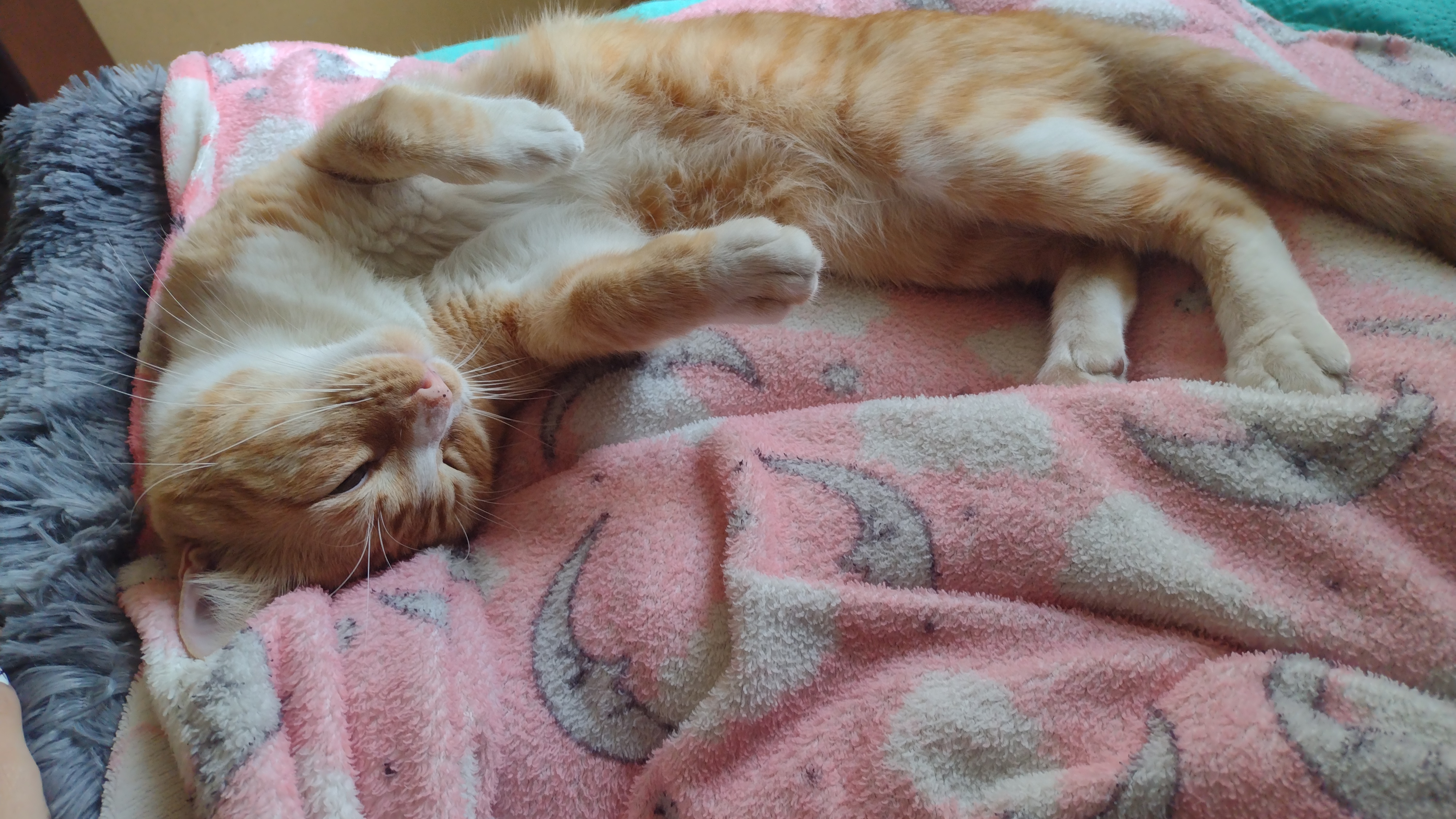
 Bodoque's profile picture
Hi Kayla, thanks for writing in.
Bodoque is adorable! And it certainly looks like he's not having any trouble sleeping!
On its own, the snoring isn't a huge concern, particularly if he is eating and drinking and behaving normally. It may eventually resolve, or he may always have a little snore - a couple of my cats do! And just like humans, cats are more likely to snore if they are carrying a bit of extra weight, so it's important to make sure he isn't becoming overweight or obese.
What happens from now on will depend greatly on the exact nature of the respiratory infection.
If it is something mild that was perhaps triggered by allergies, I would expect things to settle down in time, but you might want to consider investing in some sort of air purifier to reduce airborne allergens in the home.
One thing to be aware of, however, is cat flu, which is usually caused by one of two viruses: Feline Calicivirus (FCV) and Feline Herpesvirus (FHV-1), also known as Feline Rhinotracheitis. Both viruses can be spread through direct transmission between cats; however, viral particles can also spread through the air and be carried on contaminated objects such as clothing, furniture, and food & water bowls, and even indoor cats can be infected.
In the majority of cases, cats with cat flu show mild-to-moderate clinical signs similar to those seen in a human respiratory virus, such as:
watery eyes
sneezing +/- coughing
sore throat
nasal discharge and congestion
fever
reduced appetite
Being a viral infection, there is no specific treatment for cats with uncomplicated cat flu. However, you can help them feel better and speed their recovery by increasing their fluid intake (eg. adding water to wet food, offering cat soup/broth/liquid meals, gently warming food to increase the aroma), ensuring there is good circulation of fresh air (but avoid cold drafts), and being extra vigilant about cleaning bowls and bedding.
Some cats, particularly the very old, very young, or immunocompromised, can develop more serious complications of cat flu, such as secondary bacterial infections, pneumonia, conjunctivitis, or ulceration of the mouth and/or eyes.
Another reason that cat flu is so common is that many cats that recover from the initial infection become lifelong carriers of the virus. This means that they may intermittently shed viral particles that can infect other cats, and in periods of physiological stress, may experience a flare-up of symptoms themselves. Because immunity to these viruses wanes over time, cats that have previously been infected with cat flu can still be infected again in the future. Supplementing the diet with the amino acid lysine has been found to help boost the immunity of cats with chronic or recurrent herpesvirus.
One of the core feline vaccines is the FVRCP vaccine, sometimes called the F3 or Flu & Enteritis vaccine, which gives protection against feline herpesvirus, calicivirus, and panleukopenia. Because of the nature of viral mutation and the variation in individual immune response, even cats that have been vaccinated against cat flu can still become infected by the virus, but in those cases, the clinical signs tend to be less severe. This is also why we recommend that cats receive a booster vaccination every 3 years to help their immune system fight off viral attack, even cats that live indoors and those who have been infected with cat flu in the past.
If Bodoque shows any deterioration, I would definitely take him back to the vet to be on the safe side. Hopefully, he just needs a little more time for his airways to completely settle down, but it's always good to know what else to be looking out for!
All the best,
Dr Karyn