
How Do I Get My One Month Old Kitten To Use The Litter Box And Eat Wet F... (Vet Answered)

This question has been answered by a vet

Small Animal Veterinarian
Dr. Karyn is a small animal veterinarian originally from Australia, now based in the UK. She holds degrees in Veterinary Science (2010) and Zoology. When not helping pets, she tends to her 5 cats and garden!
The Question
Im worried if cats who little can use litter box she won’t use it. And I’m also wondering if she will eat wet kitten food and she sleeps mainly and I tried wet towel to make her potty and litter non work
Quick Info about Gwen
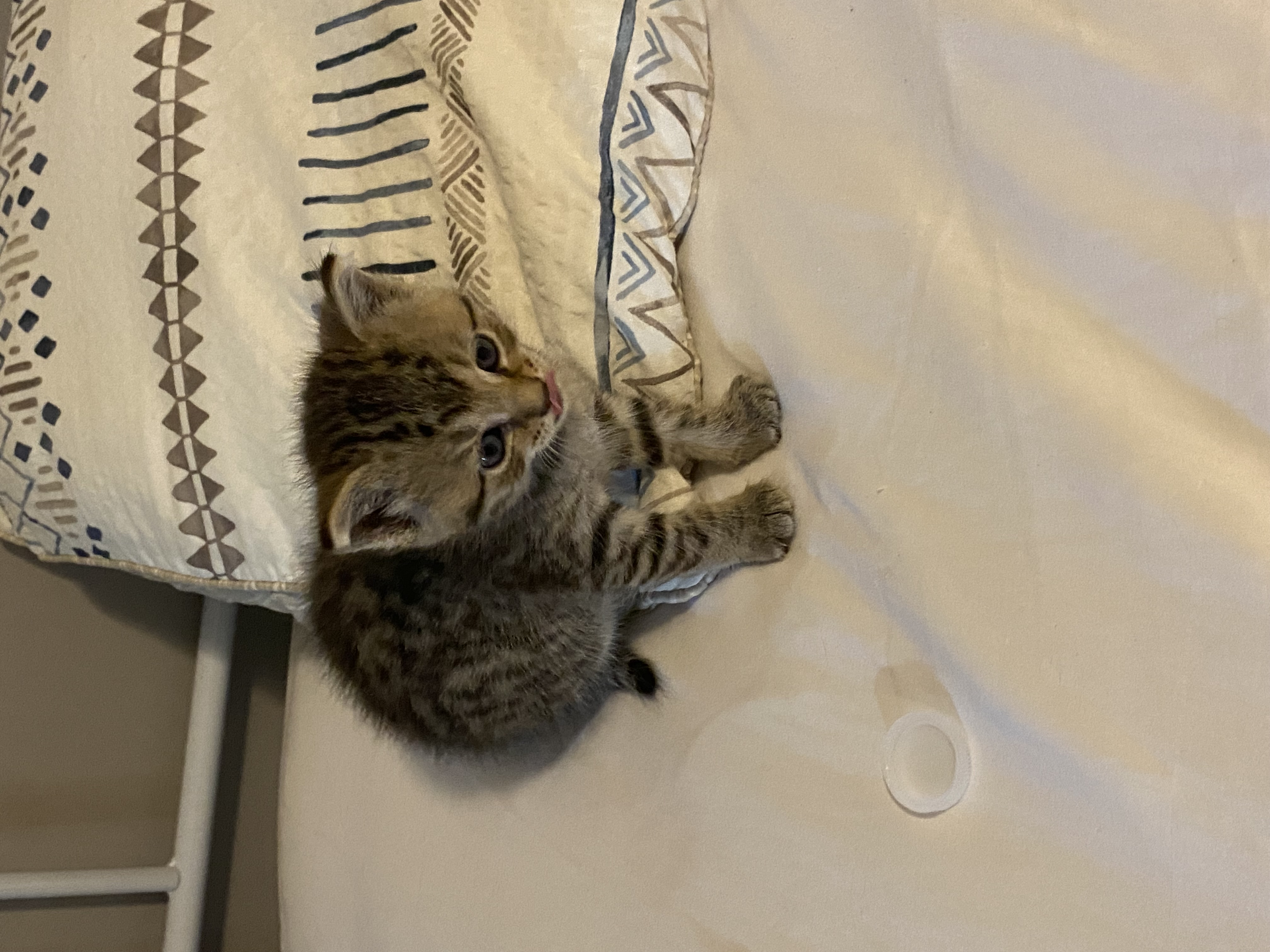
 Gwen's profile picture
Hi Stella,
Well, it looks like the cat distribution system has come for you!
Gwen does look quite young, possibly around 5-6 weeks (but this is obviously difficult to say accurately based on a photo). The first thing I would do is have her checked out by a vet to make sure she's healthy and not carrying any disease. They'll be able to give you a much better estimate of her age, provide worming treatment, and let you know what type of food she should be having; whether kitten formula is most appropriate, or if you should be encouraging her to eat solid kitten food.
Although kittens do learn a lot from their mother, they are instinctively predisposed to toileting in one area, so teaching them to use a litter box should be pretty simple.
You'll need a shallow litter box or tray to start with, and a low-dust kitty litter. After she's finished eating, take her to the litter box and dig her paws into the litter a couple of times. If she's very young, you may need to stimulate toileting by wiping a damp cloth over her back end, mimicking the way her mother would lick the area to get her to pee and poop.
Make sure the litter box is in a quiet area where she won't be disturbed. Depending on the size of your home, it can be a good idea to have a second box set up elsewhere in case she needs it.
As soon as she uses the litter box, give her gentle praise and affection, but don't go too overboard - you don't want to startle her! Never shout or scold her for accidents, as this will only cause stress and will not help her learn to use the litter box. If you do catch her toileting outside the box, gently pick her up and place her in the litter box. Even if she doesn't do anything, it can help to reinforce the link between toileting and the box.
Although it's important to keep the litter box clean, it's not a bad idea to leave a little bit of soiled litter behind until you're confident she's using it reliably.
Most kittens really do take to the litter box quite easily, so if you're having ongoing issues, I would recommend speaking with your vet.
Something else to consider is that young kittens separated from their mother and littermates from a young age are more likely to have socialization problems like anxiety or playing too rough with their humans. Depending on your situation, once Gwen has been checked by a vet, you might want to think about contacting an animal shelter to find out about getting her a kitten friend, preferably one that is a little older, already vaccinated, and confidently using a litter box.
When it comes to kittens, two is not much more work than one, and together they'll be able to keep each other company when you're out, play-fight, and burn off excess energy.
Good luck!
Dr Karyn