Help! My Cat Had Hard Poops! (Vet Answered)

This question has been answered by a vet
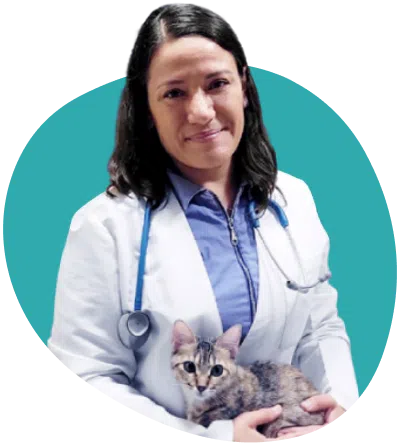
Veterinarian & Animal Behaviorist
With nearly two decades in veterinary medicine, Dr. Paola brings hands-on experience across multiple species. A graduate of the University of Guadalajara, she specializes in preventive care, animal welfare, and positive reinforcement training.
The Question
“Anthony bear is a large 18-lb cat who, for his size, according to the vet, is not that much overweight, but he has red blood on the outside of his stools quite often from licking his fur and the stools being harder, larger, full of hair, etc. I was looking for the best alternative without having to give him a stool softener that he doesn’t like and doesn’t really want to take every day of his life. I’m sure there has to be a better option, even something holistic I can just add to the food that he won’t notice.” – Dawn
Quick Info about Anthony Bear
Hi Dawn,
If you think about Anthony Bear’s digestive system like a set of household pipes, when water flows freely, everything moves as it should. But if debris builds up, and there’s not enough water flushing through, things slow down, and eventually, blockages can form. His harder, larger stools packed with fur are putting extra strain on his system, and just like too much pressure in a pipe can cause small cracks or leaks, the repeated straining is likely causing tiny tears in the delicate tissues around his rectum. That’s why you’re seeing bright red blood on the outside of his stools; it’s a sign of irritation from passing dry, bulky waste through an already sensitive area.
If this cycle continues, the risk isn’t just discomfort. Chronic constipation can lead to megacolon, where the colon becomes so stretched out and weakened that it can no longer push stool through effectively. At that point, waste becomes impacted, requiring medical intervention. The best way to prevent this is by keeping things moving naturally. Small dietary changes can go a long way in preventing serious issues, and keeping Anthony Bear’s digestive “plumbing” running smoothly now can save him from much bigger problems down the line.
A moisture-rich diet like high-quality fresh or wet food could be of great benefit as it acts like adding water to the pipes, helping prevent clogs before they start. I highly recommend you add a cat water fountain to your home to entice him to drink. You can also add pure, organic canned pumpkin puree or psyllium husk to his meals to provide gentle, natural fiber that keeps things soft and flowing smoothly. Omega-3 fatty acid from fish, salmon, or krill oil are sources of EPA and DHA. These fatty acids help to support gut motility and reduce inflammation. It is a must to keep up with regular brushing, which will reduce the amount of hair he swallows, helping to prevent stool from becoming excessively dry and bulky.
If constipation continues despite these changes, or if he starts skipping bowel movements for more than 48 hours, seems uncomfortable, or his stool becomes progressively harder, a veterinary check-up is crucial. Chronic constipation can lead to worsening problems over time, and once the “pipes” are too stretched out, repair becomes much more difficult. By making small, natural adjustments now, you can help Anthony Bear maintain a healthy digestive flow and avoid serious complications down the line. I hope this helps!
I hope this helps,
Dr. Paola